Here's a quickie about two very large subjects from cultures that are deep, wide and old. It's not my intention to give you an exhaustive tutorial on these topics but rather address the fact that most people don't know the basics concerning preparing these delights of the East in a way that produces pleasure.
Let's start with rice.
Item one is selecting GOOD rice. There is no excuse for cooking shitty rice. Event at twice the price, "expensive" rice is still retardedly cheap. If you like long grain rice I go for Indian and Pakistani brands as they tend to produce fragrant, long, beautiful, firm cooked rice. A far cry from the broken, starchy Uncle Ben's type garbage. If you live coastally, finding an Indian grocery should be a fairly simple matter. Even if said Indian grocery is quite a drive from your house you can make the trip count by stocking up on spices (Indian/Pakistani groceries tend to have a broad selection of very fresh and very cheap whole spices like whole Black Peppercorns, Cumin, Fennel, Chili powders, etc.), top quality legumes (Lentils, Split Peas, Chickpeas, Mung Beans, etc.) for all your Dal and soup making needs as well as a very good selection of bulk black teas which we will get to in a minute...
Brands I like are Swad, Royal and Zebra. When in doubt ask the people who run the place and ask for the best aged Basmati they have and then buy a 10 kg sack of it. Stay away from parboiled or "diabetes" rice, which these places also carry, because these suck. Aged Basmati or Jasmine rice is what you're after.
If you prefer Asian style "sticky" rice or Sushi rice, as it is generically called, get yourself to the biggest Asian grocery you can find and ask which brand is best. I buy big sacks (10 kg) whenever I make it to the Trans World Market when we venture down to Amherst, MA to visit friends but when I run out I go for Organic sushi rice from the bulk section of my local hippy market.
Whichever type you're cooking up, the basics are the same: Wash, Rinse, Water, Cook, Rest.
Wash/Rinse
This step is key. Pour the amount you want to make into a large bowl and cover with water. Next make your fingers into a rake shape of sorts and then run them back and forth vigorously through the rice for 30 seconds, then pour off the water and refill with fresh water and repeat until you don't get any milky starch suspended in the rinse water. With aged Basmati this may only take 2-3 wash and rinse cycles. Sushi rice... well it could take a while, but keep going until it runs clear. Failure to do this will lead to off flavors and aromas in your rice. This, you do not want!
Water
Now pour the rice into your rice cooker (or rice cooking pot). If you don't have one, get one. A simple small, cheap rice cooker will last a lifetime and make rice preparation MUCH easier for the non-rice obsessed. If you don't have one, choose a thick bottomed pot that is no more than 8 inches wide and that has a tight fitting lid. Now level the rice, place you thumb in the pot with a "thumbs down" pose where it just touches the top of the rice and fill with cold water until it reaches the middle of the first joint of your thumb. That's it.
Yes, there are MANY MANY other ways to prepare rice that involve soaking, boiling, basket steaming, straining, etc. Once you master the above technique feel free to nerd out on other methods, but , for now back to the task at hand...
Cook
If you have a rice cooker now simply cover the vessel, hit the start button and walk away. Yep. That is why you want a rice cooker. If you are cooking it in a pot, set your heat to medium-high and cook uncovered until holes in the rice form where the steam is escaping then drop the heat to low and cover tightly with a lid and cook for 10 minutes or so and turn off the heat. Do not open the pot, stir or in any other many molest the cooking rice, which brings us to...
Rest
Now the hard part. Allow your rice to rest, covered for at least 20 minutes before serving. The result will be firm, fluffy rice in the case of Jasmine or Basmati rice and non-soupy/chunky rice in the case of sushi rice. Very important.
Notes
If you seek flavored rice in the case of Basmati/Jasmine types you can add salt to your rice before you cook it, substitute chicken stock for water, color the rice with a small amount of Turmeric, add ginger and garlic, etc. etc. just make sure to stir it into the rice before cooking or it will end up on top of the rice, which is no good.
Tea Brewing
Thankfully, brewing good black tea (if you want to drink green tea, knock yourself out, but I won't comment on the making of that swamp gas/sea weed tasting bullshit here) is MUCH less complicated.
First, start with, like all things, good quality tea. For bagged tea I like PG Tips, Taj Mahal, Red Label or Yorkshire brands.
Now boil cold water that you have gotten from the tap after the water has run for 1 minute to oxygenate the water, then pour the water over the tea bag in your mug immediately after you take it off the boil. Very important! Next steep the tea for 2 to 2 1/2 minutes and remove the tea bag. Add cream, sugar, honey, chai spices, whatever and enjoy.
Friday, May 26, 2017
Wednesday, May 24, 2017
Isaac Newton, Occultist and Founder of Modern Science: a Slight Return
Here's a fun Nova episode about Maynard Keynes, his obsession with Isaac Newton and how the inventor of calculus, modern physics and optics was revealed to be a raging occultist. This guy would kill Bill Nye "The Science Guy" and eat his liver with Fava beans and a nice Chanti.
Thursday, April 27, 2017
Saké UPDATE: Blew It.
Alright, let's start with the basics.
Ingredients
1 gallon boiled or otherwise de-chlorinated water
8 lbs. (dry weight) organic sushi rice
1/4 cup dried Koji rice
LV 118 yeast or other white wine yeast
2 gallon sanitized fermentation bucket with airlock
Procedure
First off, when I list off an amount of rice by weight I am saying "dry, uncooked rice" OK?
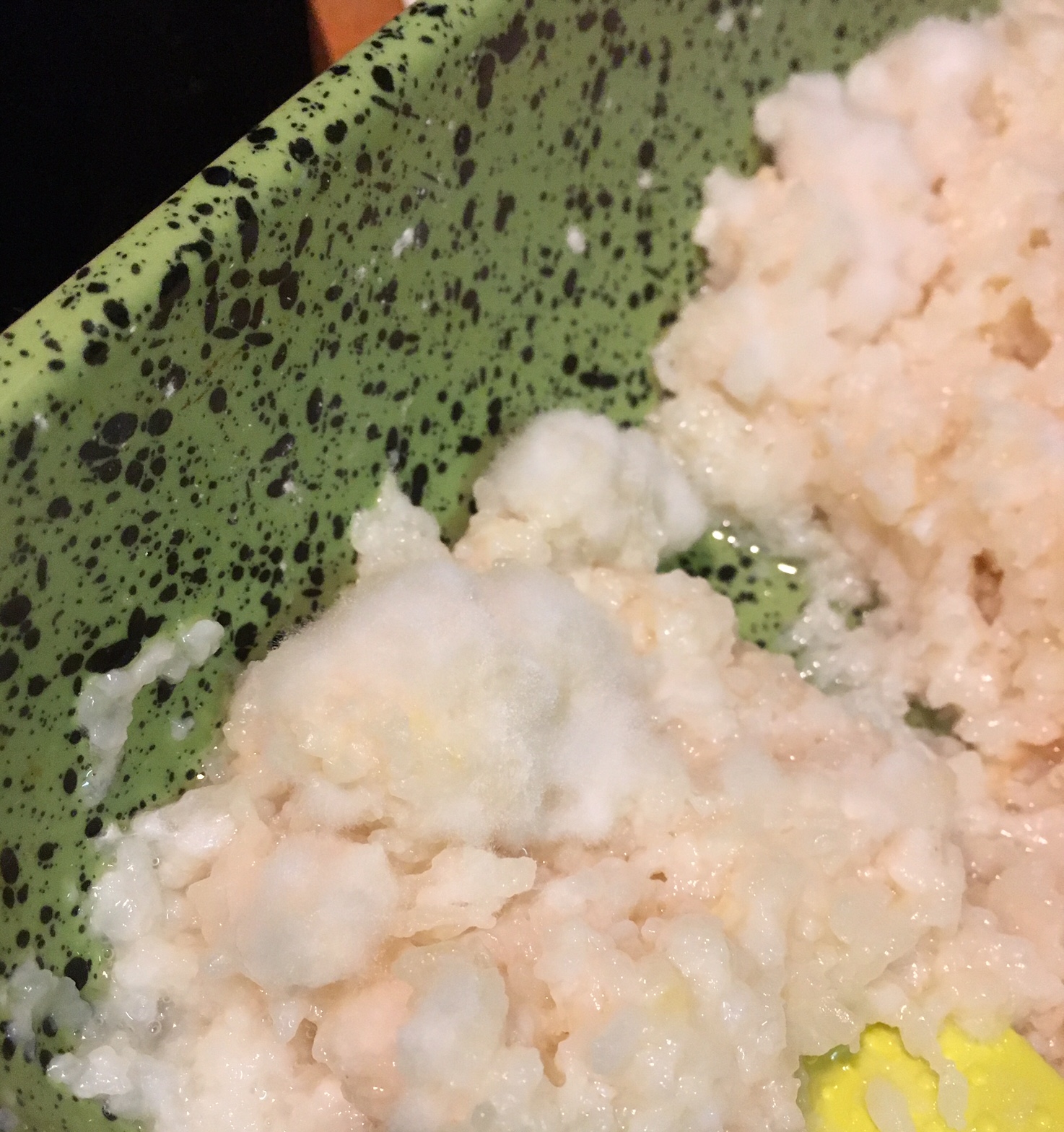
Anyway, start by washing (very thoroughly) 1 1/2 lbs of rice, steaming it with 2/3rd the amount of water it normally calls for and then allowing that rice to cool. Meanwhile turn on the light in your oven. This should make it about 75-85' F which is just right for Koji growing. Now spread the rice into a clumpy layer across the bottom of a small casserole. Grind a few tablespoons of the dried Koji up with a mortar and pestle or a CLEAN spice grinder and sprinkle over top. Cover it with a damp cloth and place it in the oven. Don't forget it's in their when you're pre-heating to pan roast a big assed rib steak, mkay?
![]() |
| I used this stuff. It was about $10 a bag, which should last me 8 batches if I don't back slop. |
So after 2 days the rice should be white and fuzzy and there should be liquid in the bottom of the pan. Bueno. Now steam 2 1/2-3 lbs of rice, allow to cool and then combine 1/2 your water, the koji rice, the steamed rice and the yeast in the bucket. Break up the rice with your fingers (thoroughly washed/scrubbed) and hands and pop on the lid/airlock.
Wait 2 days.
Do all of the above again.
Wait 7 more days.
| My pictures are shitty on purpose. It's my personal style. |
Well, that's how I should have done it.
Instead I did 3 Koji/rice cycles because I have a tiny rice cooker. I doubt this effected anything negatively.
I also added apple slices (don't ask) and then was forced to let the fermentation go 20 days because I was short bottles and time and headspace. These two things lead me to having 1 1/2 gallons of Rice Kefir.
This is not the worst thing that could have happened since my impetus to make my own sake was Sandor Katz unpasteurized sake recipe on his blog from a month or two ago. I wanted all those good microbes all up in me like a yoga hippy. So that's great.
However the resultant sake is SOUR as fuck. Lactic fermentation. This was likely caused by the A) higher than desireable temperature during the fermentation. You should shoot for 45-50'F but by the time I got my shit together this Spring it was in the high 50's to high 60's with a few 80' days. B) Those fucking apple slices. Wild yeast, my ASS or C) letting it go too long.
Of the above factors, I think that letting go too long (from what the internet full of Fellow Traveler Bumblefucks has told me) is the biggest bukkake moment in my string of bad decisions. Basically 10-12 days max beginning to end, bottle and refrigerate (or pasteurize). It might be a little sweet but it won't be sour. Soon I'll have some bottles so I can dance that theory.
Oh yeah, and the fasting idea from the last post? Didn't take. Who knew?
Tuesday, April 25, 2017
Dumbing Down Things Even Further
If you're nervous that this might be the title of another of my screeds against the short-attention-span-theatre of Western civilisation, breath free my friends. It is not and I will tell you exactly why.
I was hiking down the hill this morning, past the great lines of 200 plus year-old grave markers, with a bit of a bee in my bonnet. I intended a screed of screeds against stupidity and thick headedness of all sorts. You see, I had just spent 36 hours in NYC for a bit of pre-birthday alone time and arrived back home with a bad taste in my mouth about the dangerous increase of spiritually dead materialism I saw at work there. By God I was going to set the world to right with the strokes of my digital pen!
Then a strange thing happened: as the tombstones ticked by a question appeared in my head I had heard said by Ur-permaculturist Mark Shepard in a presentation about selecting food producing trees that thrive in local conditions: "Why would I spend my time helping out something that wants die or trying to kill something that wants to live?" The point is that trying to change anyone's mind with a screed seems, well, stupid and thickheaded at this point in time. THE wisdom of Permaculture is to work with nature, not against it.
Onward.
What this post is really about is how I have doubled down on the simplification of my cider making procedure.
Ever trying to cut down on things to buy, clean and sanitize I elected to simply allow my gallon jugs of cider to spontaneously ferment and then simply poking a small slit in the their tops with a sharp pocket knife to allow CO2 to exit but not allow the vinegar bugs to enter. Not that I am that worried about them at this point since sour beers and kombucha seem to all the rage these days thus contamination and laziness would be once again cloaked by the current mode.
And so it went for two weeks when I drilled the tops, slid the siphon tube in and filled 2 champagne bottles, 2 twenty-two ouncers, 1 Pellegrino litre and a bottle of Mexican Sprite. The results were just as good, if not better, than the previous batch. Different, lazier, method. Same great Pet Nat.
I was curious if I was perhaps high on my own supply. While I was a wine buyer for 3 1/2 years and have a decent pallet, I am also aware how one's mind can cloud things so I took a few bottles along on my trip and gave them to a few people who make their money with wine. Results have been more than favorable. Valhalla. Do try this at home.
This weekend I will be bottling up my first batch of Saké. It probably should have been filtered and put up last week but I ran short of bottles, so we'll see how that turns out. Ultimately there is $8.00 worth of rice at stake and, worst case scenario, I'll have $25 worth of rice wine to cook with for the next year or two. C'est la vie,' say the old folks, 'it goes to show you never can tell.'
What else?
I dunno. I've been thinking about fasting.
Let me explain. The spring of my Senior year of high school I got really sick. Fever. Hallucinations. Sweating. The whole nine yards. When I eventually got completely better several weeks later, my sense of smell had been completely altered. Most things had no smell at all while the few things I could smell were mostly things like the exhaust from old, pre-smog, automobiles.
You can probably see how this condition might make food seem unappealing. It took almost a year for my sense of smell to grow back and during that time I ate much, much less that I had previously and, also, I experienced a lot of personal and spiritual growth. These two things, obviously, were not likely related. However I can't shake the feeling that they were. Pretty much all religions have periods of fasting to help attain spiritual growth in their orthodoxies AND science more and more says that there is a role of fasting in extending human lifespan. Hmmmm.
Friday, April 7, 2017
Weekend Weirdness: Meet Viktor Schauberger
Comprehend and Copy Nature: The Legacy of Austrian Forester Viktor Schauberger.
Uncle Bumblefuck Attempts Shoyu, Saké and Accidentally Makes Pet Nat
| I got pétillant naturel, dawg. |
Item One: Cider Successsssss
I hate to follow directions. Obviously, not when I'm replacing critical suspension components on the front end of my 2007 Chrysler Town and Country, but most of the time I have an allergy to doing what people, especially "experts" tell me to do, particularly when it comes to making food type things. The rationalization for this is that failure during the pursuit of a goal teaches you far more than following directions to the letter. In fact, said failures often teach you WHY you follow instructions to the letter.
Anyhow, the first time around making cider I bent a lot of cider making rules without breaking them. I didn't use carboys or brew buckets. I added no yeast nutrients or acidifiers or additional sugar that almost all recipes call for. However I stuck to the plan fermentation-wise and used Lavin 1118 "champagne" yeast and added a bit of pectinase to make the cider less cloudy and boost the alcohol a tiny bit.
The results were fine. It was clean tasting and completely serviceable. If someone gave you an ice cold bottle of one at a BBQ you would drink it and not think anything about it. Most folks would count this as a success but I was determined to do better or totally screw it up trying.
With this in mind I picked up another couple gallons of cider and, instead of pitching yeast and popping on the airlocks, I let the gallons sit on top of my fridge until they started to spontaneously ferment then added pectinase, a few pinches of Lavin 1118, the bubblers and called it a night. A few days later I noticed that the bubblers were conspicuously not bubbling. Fuck.
As it turns out, when I shoved the airlocks into the holes I drilled into the caps, I tore the lids and they all had 1/2 inch cracks letting all manner of who-knows-what into my fermenting daddy juice. Not. Fucking. Good. Rather than abandoning the batch to cider vinegar I covered the tears with painters tape and let them go for two weeks until they started to slow down fermentation. Upon opening the caps I noticed that they smelled WILD. Well, too far down the path to go back now, I figured and proceeded to bottle them up and hope for the best. From the juice that spilled on my hand, as I clumsily racked the cider into a duke's mixture of scrounged glass bottles, it seemed weird, but tasty.
Rattled as I was because my well laid plans had gone distinctly awry, I neglected to dose the bottles with sugar to carbonate them, figuring that, since the cider was still nominally fermenting, there would be enough natural sugar left to make them fizzy. Phrased another way: Fuck It.
Anyway, a week later several things happened. First, I decided I needed to do some quality control testing on my confused, half-assed cider and cracked open my 12 oz. tester bottle. It was DAMNED GOOD. The light carbonation had added a refreshing bite to it and the weird aromas of my feral cider came together under confinement into grapefruit and pineapple flavors that rivaled the best Pet Nat sparkling wine I had ever drank. Alchemy!
Sow ears => Silk purse.
Speaking of Pet Nat: I am an idiot.
5 or so years ago natural sparkling wine (or Champagne for you vulgar uninitiated) was all the buzz in Brooklyn wine snob circles and they dubbed it Pet Nat which is short for it's French name pétillant naturel. I was aware of it, drank a bit of it and pretended to know exactly what it was.
Honestly, I didn't give a shit about Pet Nat.
I was more into rye whisky and cheap beer at that point, having tired of the increasingly douchey wine scene that was attracting the same type of trust-funder "Me Too!" fuckturds that were busily ruining the food scene in New York City. I assumed that it was natural wine (wine made from the naturally occurring yeasts on the grapes, rather than farmed commercial yeasts) that was put in bottles with Dosage (sugar of some sort) and capped. Fin.
Nope. You bottle incompletely fermented wine and let the natural sugars in the juice carbonate it. Yep, Uncle Bumblefuck had, through lazy half-assedness, accidentally made Pet Nat cider. Who would have guessed?
Onward.
| Turd City |
Shoyu or, for the rest of us, soy sauce.
With an eye towards teaching myself how to grow Koji so I could make Saké, I decided to do a trial run and make some bulgur wheat koji and turn it into olde fashioned artisan soy sauce.
Basically, I sprinkled ground up koji starter over some abandoned cooked bulgur wheat in the fridge, covered it with a damp towel and threw it in the oven with the light on which, by divine caprice, makes the perfect atmosphere for growing koji. After two days it got real fuzzy and I added pressure cooked organic soy beans and let it go another two days in the fuzz chamber. With all the ingredients looking suitably inedible I mashed in whole wheat flour and rolled it into a log and then cut it into the turdlets you see above.
After a further 3-4 days they started to smell alarming and stunk up my house with weird aromas. Seemed like a good time to throw them in a jar with a strong brine and see what happens! Updates to come. Probably.
![]() |
| Moldy rice or Koji? It's both. |
Lastly, I just began my saké last night.
If you look online you will notice that the process of saké making is pretty fucking anal. Lots of steps and precise procedures. Well, fuck that. I set out to make a farmhouse style saké which is dead simple by design and that design is meant to stick it to the man and fuck the police.
"Wait a minute. How does one 'stick it to the Man' with saké?' you might ask and rightly so, since it sounds, frankly, crazy.
Well, first off, you must know that making your own booze in Japan is illegal. While America may be an embarrassing dumpster fire, it is still a dumpster fire where you can make your own booze (except distilled spirits. But it's not like anyone at the BATF really cares if you're making vodka in your basement).
Secondly, you need to know that a traditional Japanese farmhouse drink, called Amazake (which is steamed rice that has been broken down with the amylase enzymes of rice koji) is basically Saké that hasn't fermented yet.
Thirdly, imagine that you are a Japanese farmer who likes his saké but doesn't want to pay for it and the saké police come around and finds your stash. Because you've made a crude and cloudy rice wine you coolly and calmly tell the Man that "Oh shit! I totally forgot about my last batch of Amazake. What a shame!". Plausibly deniability to the people, people.
I'll update later with this recipe and how it's coming along. Until then I'll leave you with this:
Spring has finally gotten sprung here in Southern Vermont and my forty-wonderful birthday is coming somewhat soon so I figured I'd get Hobbit as fuck and renew my old Spring ritual of rereading the Lord of the Rings.
$6.80 very well spent.
Thursday, March 30, 2017
Basics: Italian Sausage
"...if you give a man a fish he is hungry again in an hour. If you teach him to catch a fish you do him a good turn."
Anne Isabella Thackeray Ritchie, Mrs. Dymond (1885)
![]() |
| Time to get your sausage fingers on. |
One of the single most useful things you can learn to do, if you cook a fair bit, is to make your own Italian sausage. Pasta sauce, lasagna, risotto, sausage, kale and bean stew, etc., etc. are built on the central pillar of sausage. So much so that their flavor and quality more or less depend on how good the sausage used in it is. Unfortunately, if you've spent much time in the average grocery store meat aisle, you've discovered that most of the commercial sausage out there is complete shit.
This is totally fine.
You can easily leave the world of crap sausage behind and never look back. Of all of the "artisan" food trends out there, making really good sausage is, by far, the easiest to do yourself, without any special equipment, in a few minutes.
What lies below is a all-purpose Eye-talian recipe suitable for most applications. You can easily customize it to your taste by adding or subtracting ingredients. Just remember that not all the stuff in the "Optional" section play well with each other. Fennel pollen is a stand alone. Parmesan, parsley and lemon zest go well together. Rosemary can be added to the existing recipe to make it *nice*, just don't use too much!
THE key to successful sausage it to use GOOD ground pork. Go to a real life butcher shop and get freshly ground pork shoulder or buy a frozen pack of pork at the farmers market, just don't buy the donkey-dookie ground pork they sell at the Stater Brothers, OK?
Italian Sausage:
1 lb. ground pork (80% fat 20% lean)
3-4 cloves garlic, crushed and minced fine
2 Tbsp. decent red wine
2 1/2 tsp. whole fennel seeds, lightly toasted in a dry pan until fragrant
1 rounded tsp. Kosher salt
1/2 tsp. freshly ground black pepper
1 tsp. sugar
Optional
Crushed red pepper flakes
Fresh rosemary pulled off the stem and finely minced
Fennel Pollen
Grated Parmesan
Chopped parsley
Lemon zest
First, you're gonna need a big mixing bowl. Plop your ground pork at the bottom of it and simply add all of the ingredients on top, saving the red wine for the last. Now mix the pork and friends together using a dough kneading motion, giving the bowl a quarter turn after each single kneading action. When the sausage firms up and starts sticking to your hand, you're done.
Yeah, that's it. Seriously.
Are you now as angry as I am about how shitty pretty much all the sausage commonly available in these United States is? You should be. It's the direct result of fucking Cultural degeneracy, people! Take the power back. Make some sausage.
p.s.
If you'd like to make linked sausage, get you some 32mm hog casings from the internets or butcher shop and cut off a 3 foot section. Soak this in a warm water for 15 minutes while you cut the top (the mouth to the bottom of the shoulder, like an inverted funnel, which it is going to be.) off a stout 1 or 1.5 liter water bottle (Fiji bottle work good and the water has free silica in it, or so I've been told) and round off the edges with a bit of sandpaper. Wash your new homemade funnel and slide the hog casing over the bottle neck like you were trying to get a Trojan on a wiener. If wiener jokes bother you, stuffing sausages in NOT for you. Tie off the end, fill the funnel 1/2 full of meat and start jamming the meat through the neck with your thumb while holding the casings taut with your other hand. Keep doing this, trying to avoid air bubbles as much as possible, until you're out of meat. Tie off the other end flush with the end of the meat and then twist the tube of sausage into 4 equal links.
Finally fold the sausage links over one another till you get this kinda thing:
Refrigerate, uncovered for a few hours to allow the casings to dry out and then snip into links for grilling. Not too hot! Medium heat or they'll blow the fuck up.
Enjoy.
Subscribe to:
Posts (Atom)